Shop, ship, delivered

How I helped Shopify Logistics transform from sales-led to self-serve product growth.
8x
Inventory transfers created
A measurement of intent to send products
4x
Inventory activation
Merchants who send products to Shopify warehouses
-17
Average days to activate
Reduced the number of days from 38 to 21

The Challenge

Shopify had a unique opportunity: with millions of merchants already on its platform, it could extend its e-commerce offering from storefront all the way to the customer's doorstep. That ambition became the Shopify Fulfillment Network (SFN), a multi-billion dollar business unit.

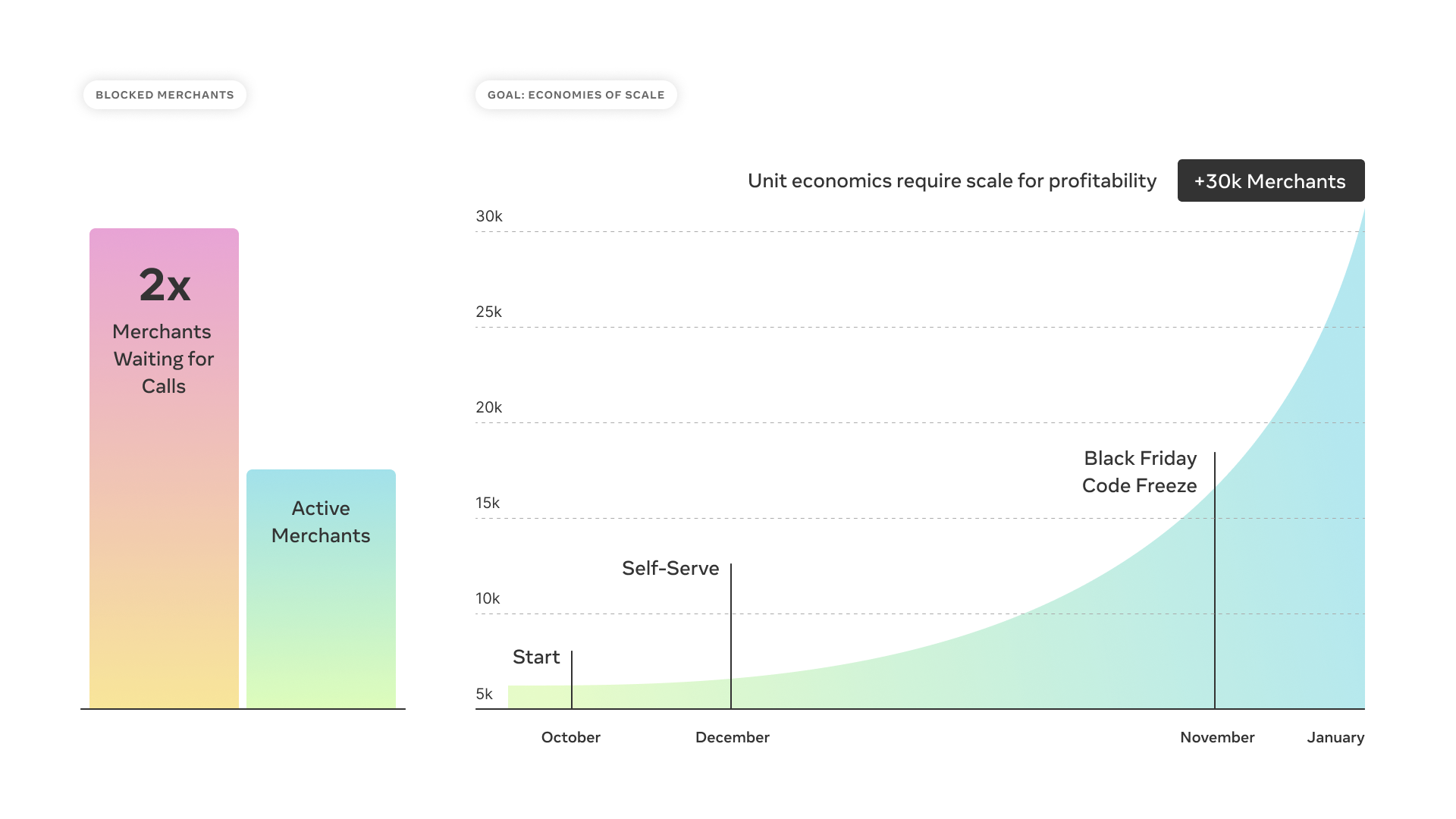
SFN's early growth model relied on sales calls to onboard every merchant. These calls served real purposes — screening risky merchants and products, confirming eligibility, and walking merchants through complex pricing. But they were a bottleneck. Twice as many merchants were blocked from activation as were using the logistics service, but SFN needed to reach 30,000 active merchants by end of year, up from 5,000 at the start of the project. At that scale, a sales-led model simply wouldn't work.

The challenge, then, was building a self-service onboarding experience that could screen merchants and products, confirm eligibility, and answer pricing questions — all without a sales person in the loop.
Placeholder image

Twice as many merchants were blocked from activation as were currently using the logistics service
How we did it

There were several nested problems to solve, each requiring its own solution and a fair amount of internal negotiation:

Simplifying pricing

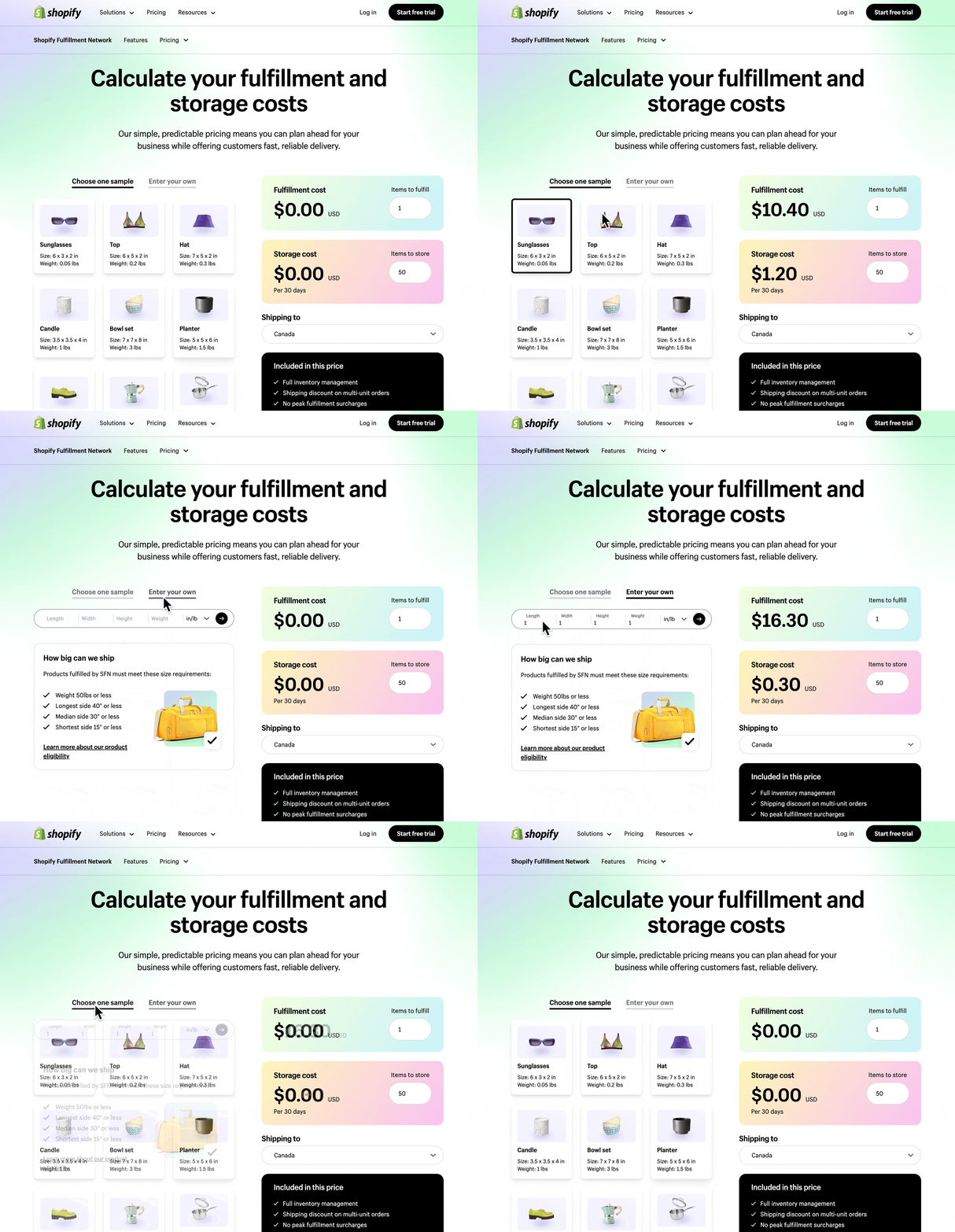
Fulfillment pricing is genuinely complex — it involves dimensional weight calculations across size, weight, warehouse time, and shipping distance. Until now, sales reps had handed merchants a spreadsheet to work it out themselves.

My team designed two self-service calculators: one for marketing pages (no merchant data available, estimate-based) and one for post-login (personalized quotes using actual store data). We started with the marketing surface to improve top-of-funnel conversion. After launch, logins from those marketing pages to the SFN application increased by 7%.
Placeholder image

Shopify logistics pricing calculator
Removing outdated eligibility blockers

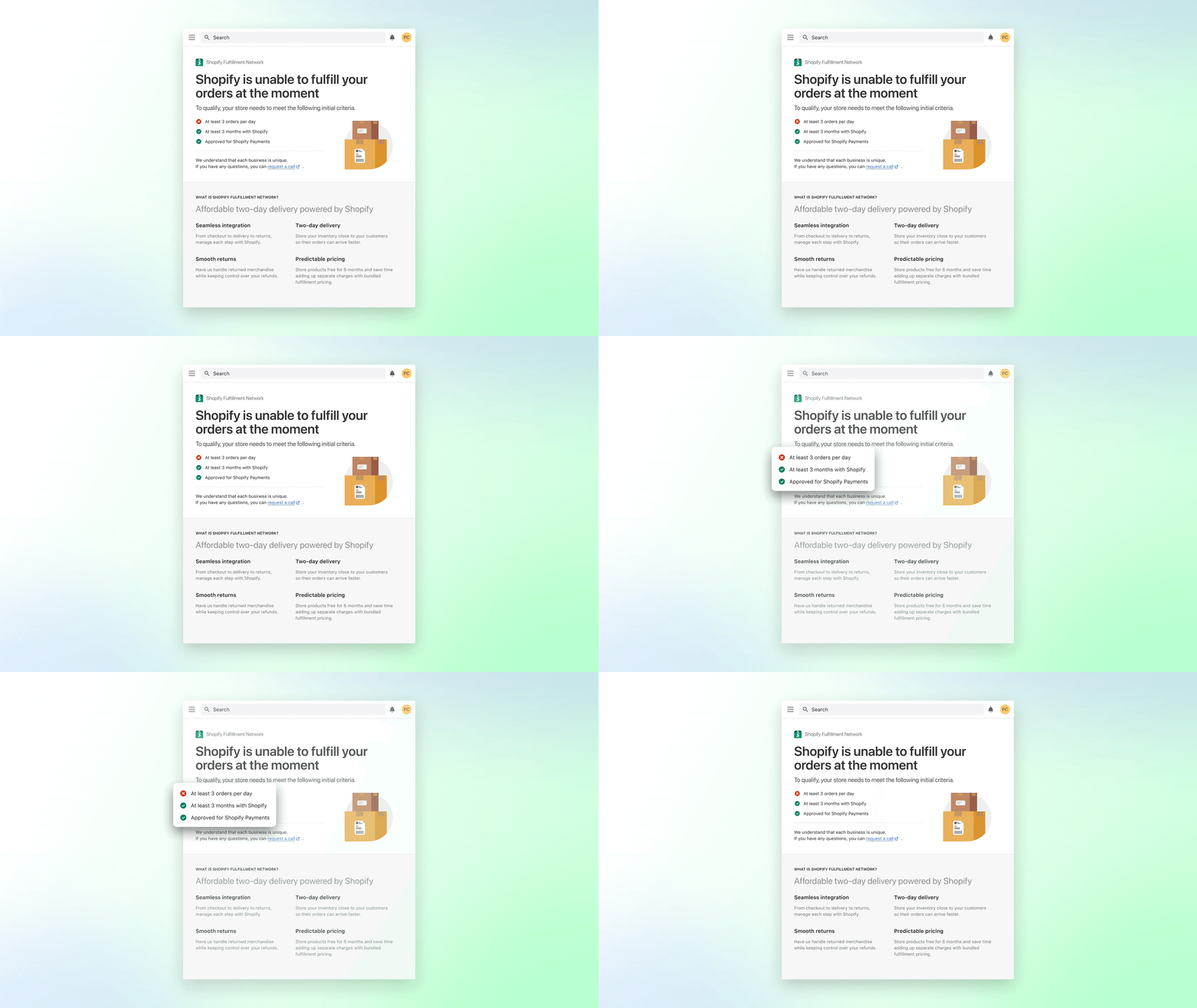
Merchants were being blocked for sensible reasons in the network's early days, but these blockers no longer aligned with goals:


I found that well over 5% of merchants in our total addressable market were hitting these blockers. And many of these were new merchants intending to switch from other providers (so "less than three months with Shopify" was particularly bad).

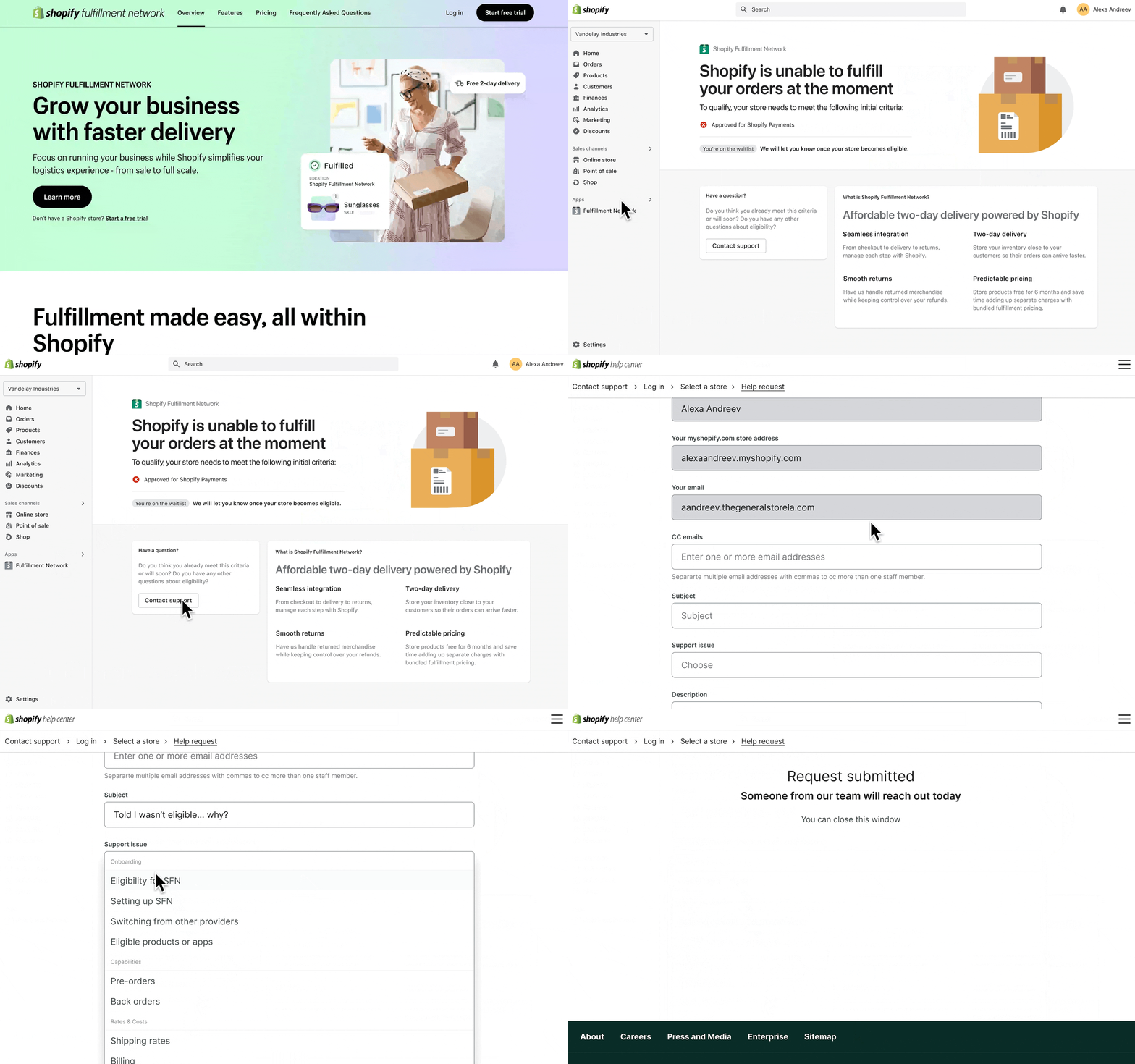
After negotiating with my PM and Sales peers, we removed all but one requirement — Shopify Payments approval, which we kept as a proxy for Terms of Service compliance. The blocked merchant rate immediately dropped from over 5% to under 1%.
Placeholder image

Merchants were blocked from joining if they didn't meet this criteria.

Replacing sales calls with self-service

This was the most complex piece — and required the most stakeholder management.

Sales team: The sales team understood the model needed to change, but where to draw the line was a sticking point. Working with our data team, I found that 90% of existing merchants had fewer than 40 average daily orders. We agreed that these merchants would be self-serve only going forward, while merchants above 40 ADO (roughly $2–4M/year revenue) would be eligible for a white-glove option with sales staff access. This preserved existing quota and commission structures, which was critical to getting alignment.

Data team: Early in the project, the data science team was confident their product risk model API — which would programmatically score merchants and route them based on risk — would be ready at launch. It wasn't. We had to find another way.

We audited the nearly 60 eligibility and risk factors used in the existing process. Going line by line, we eliminated factors that were no longer necessary and automated those that could be resolved using merchant store data. That left 5 factors we couldn't remove or automate before the risk model was ready. We'd have to ask merchants about these directly — a calculated friction trade-off to keep the funnel moving.

Preserving existing quota and commission structures was critical to getting multi-team alignment.
Curveball: the Deliverr acquisition

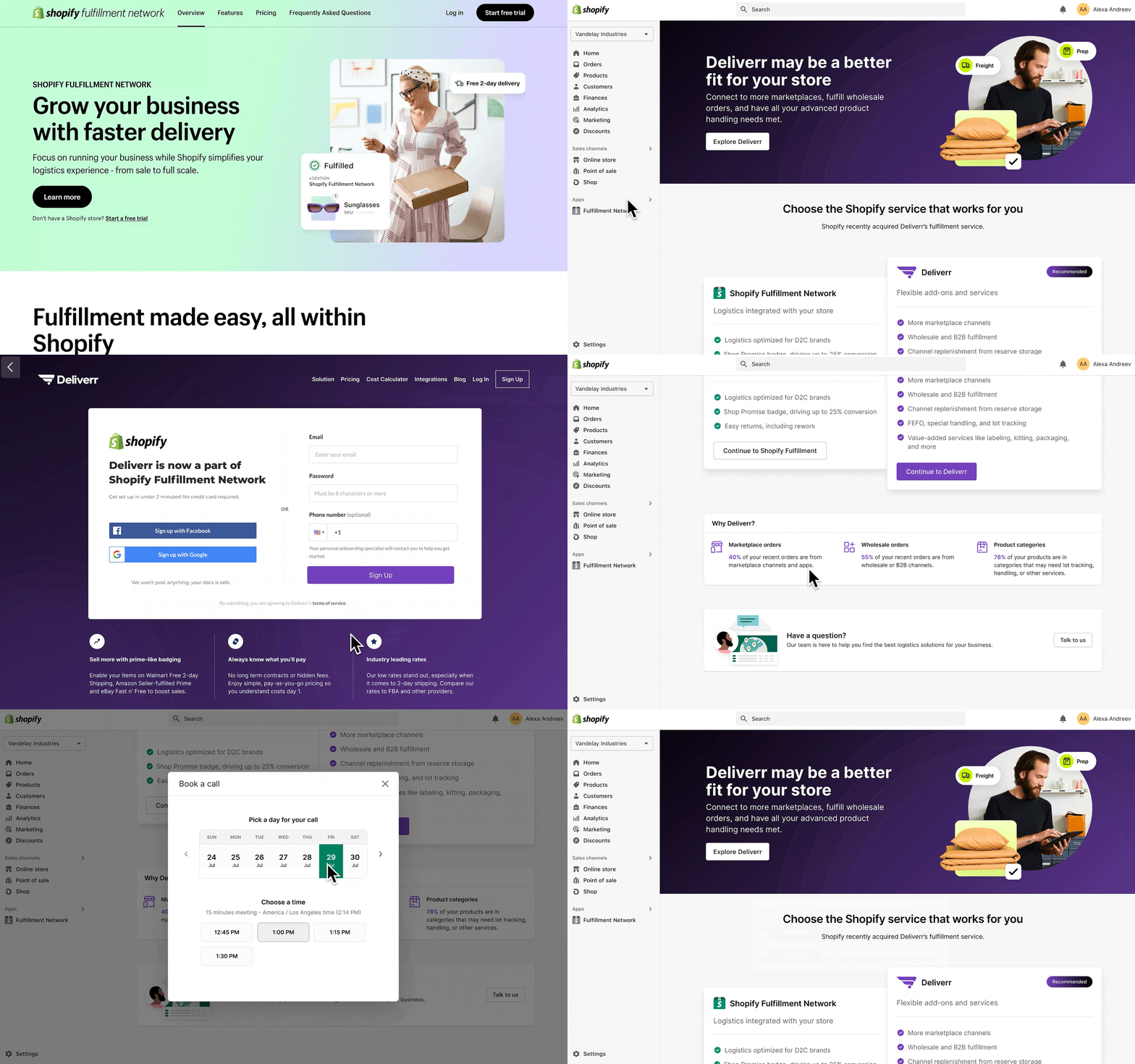
Mid-project, Shopify acquired Deliverr, a fulfillment competitor with capabilities SFN didn't yet have (custom packaging, FIFO inventory tracking, etc.). With two siloed warehouse networks now in play, we needed to route merchants to the service that best fit their needs while the systems were integrated — a process that would take roughly a year.

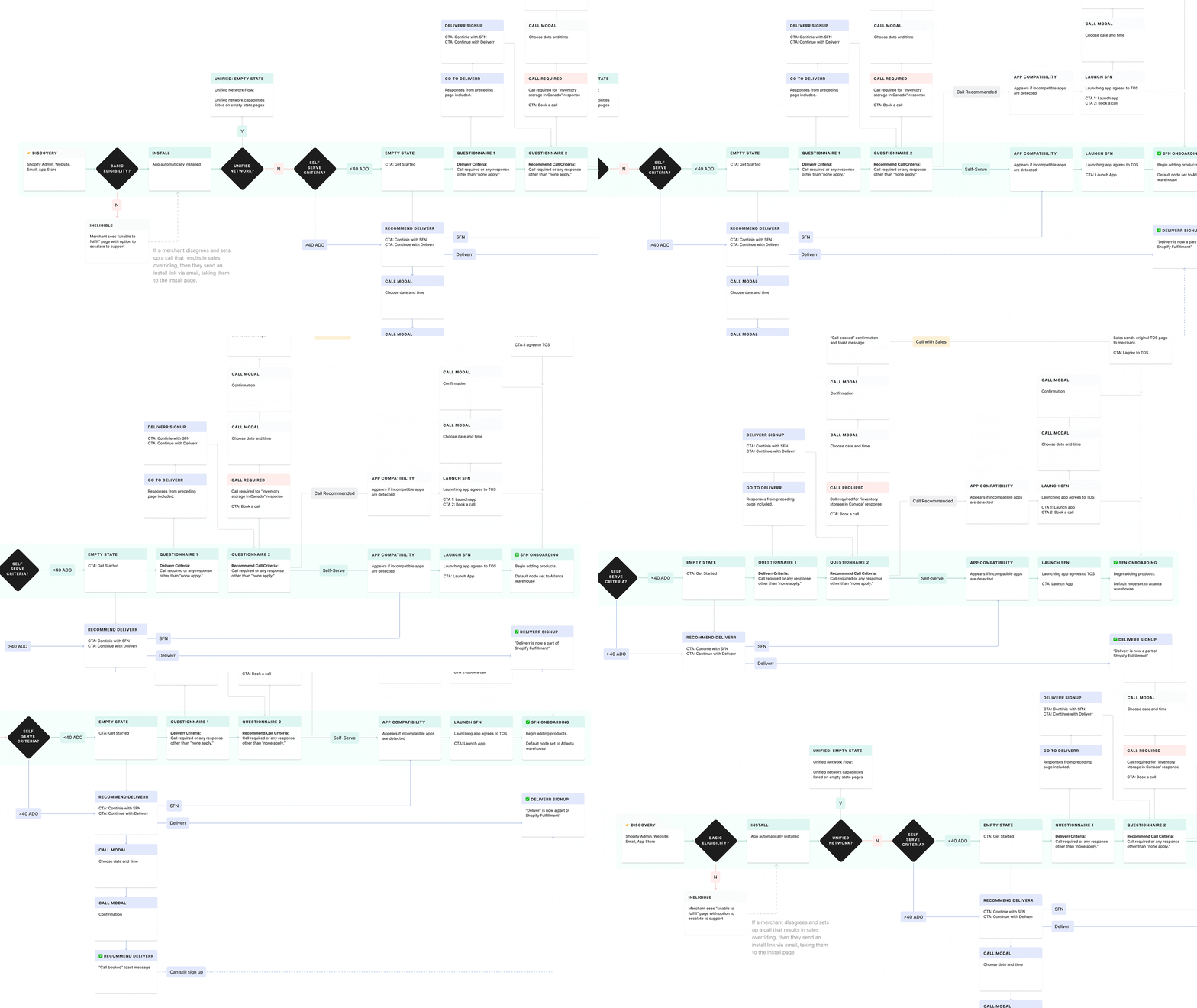
I led the alignment across sales, data, and management teams from both SFN and Deliverr. We landed on the following routing logic:

Placeholder image

Mapping the logic and flows: Green is SFN eligible (happy path), blue is Deliverr, yellow is sales call
What we shipped

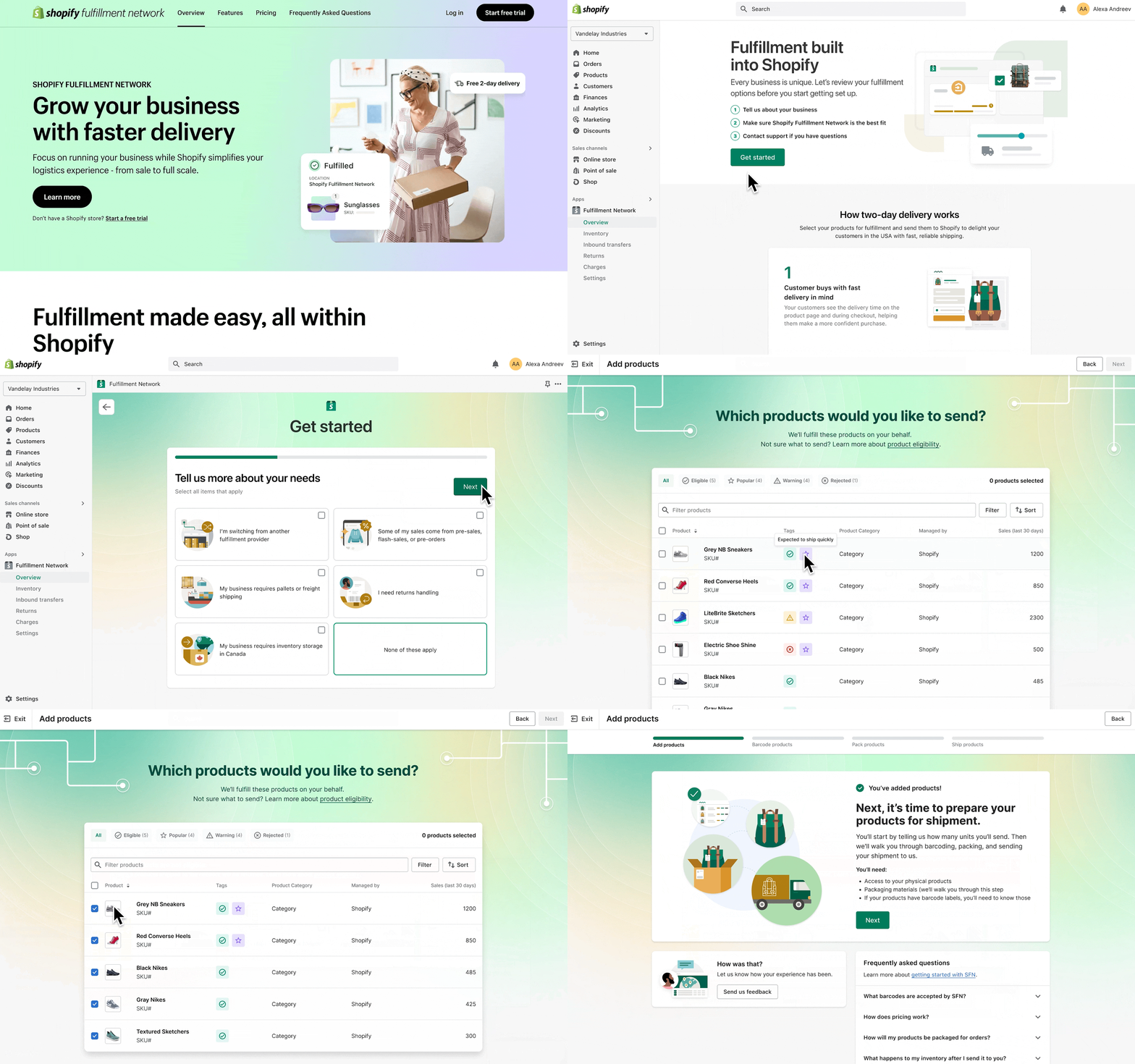
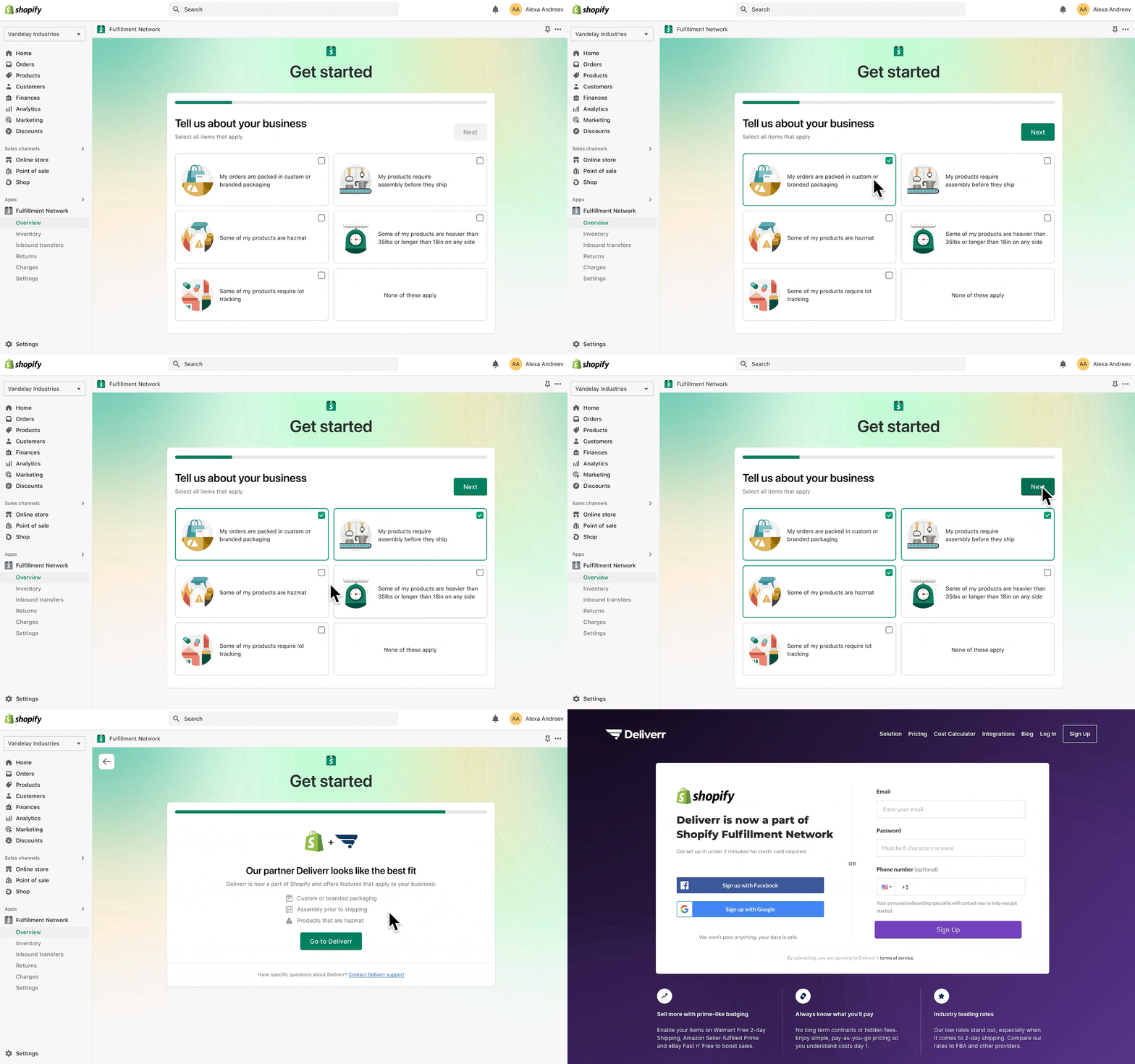
After all of the above, we aligned on a streamlined two-screen questionnaire — asking merchants the minimum questions needed to route them to the right service or surface a sales conversation where warranted.
Placeholder image

Ineligible merchants were placed on a waitlist but could escalate.
Placeholder image

Merchants with >40 ADO would be recommended Deliverr automatically (but could switch).
Placeholder image

Merchants with less than 40 ADO would be asked a few questions and if eligible allowed to onboard.
Placeholder image

Some responses warranted a Deliverr recommendation, but it wasn't required to onboard.
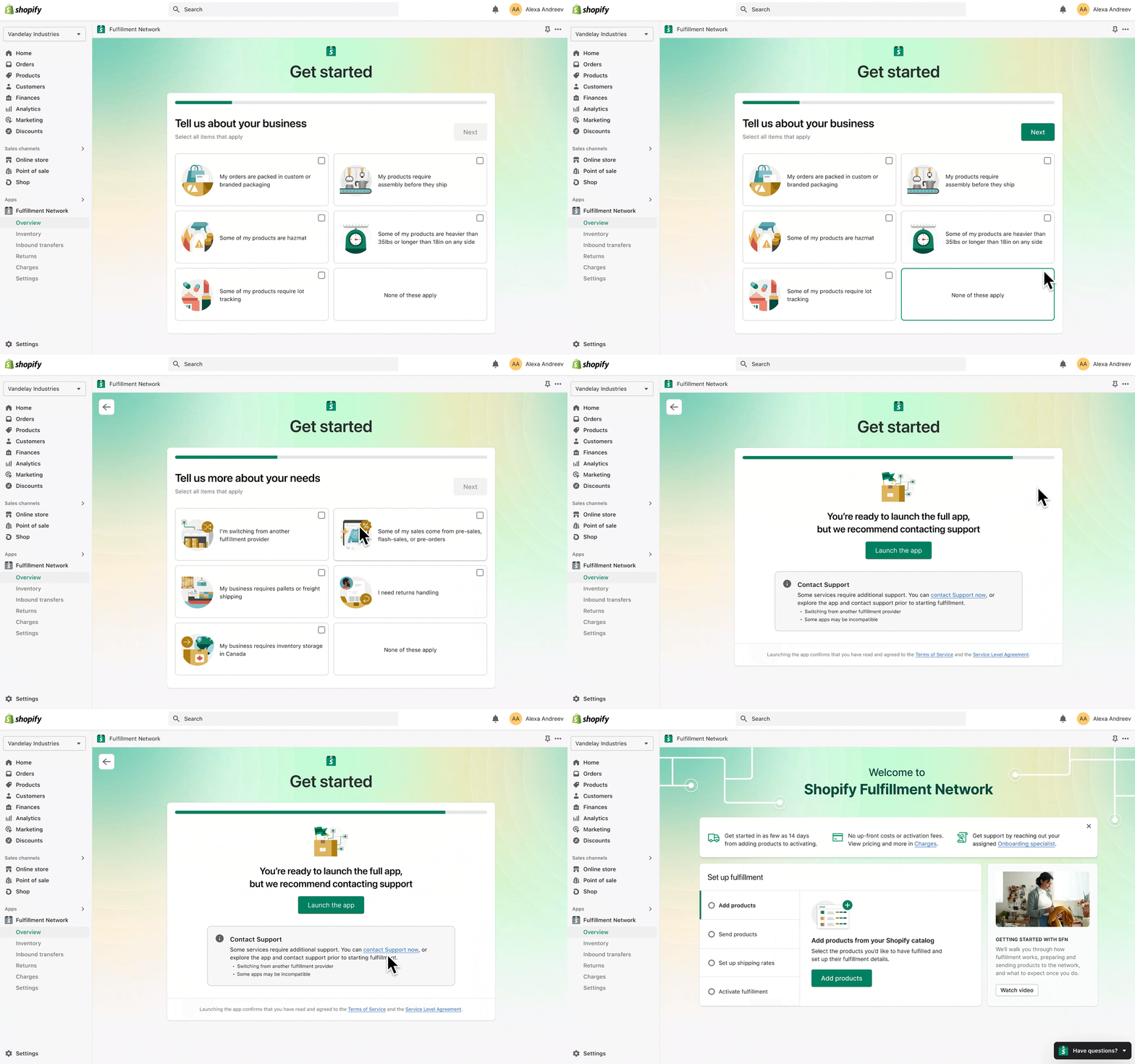
Placeholder image

Some responses warranted a sales call but it wasn't required to onboard.

Outcomes

Three months after launch we saw an 8x increase in Transfers Created (merchants creating shipping plans to send inventory to warehouses), a 4x increase in Activation (merchants with at least one sellable item in the network) and the average days to activation dropped from 38 to 21.

This put SFN comfortably on pace to hit its 30,000 merchant goal within months of shipping and de-risked the time it would take to merge the two warehouse networks and associated systems.
8x
Inventory transfers created
A measurement of intent to send products
4x
Inventory activation
Merchants who send products to Shopify warehouses
-17
Average days to activate
Reduced the number of days from 38 to 21
Building communities in a virtual world
Next Project

Building communities in a virtual world

How I helped find product market fit and launch over 100k communities in the Metaverse.